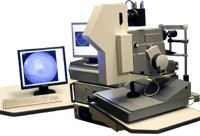
|
|
angular field
of view |
20×15
градусов |
|
|
manual
compensation
of ametropia |
±20 D |
|
|
adaptive
compensation
of ametropia |
±3 D |
|
|
image sensor
dimensions |
30x20 mm |
|
|
image
resolution |
3000х2000
pixels
(4000х4000 optional) |
|
|
intensity levels |
12 bit |
|
|
image capture
rate |
1 fps |
|
|
optical
resolution |
<3.6 µm (in
the center) |
|
|
aberration
measurement |
36
Zernike
polynomials |
|
|
maximum
aberration amplitude |
20 λ |
|
|
measurement
accuracy |
λ/15 |
|
|
typical time of
aberration
measurement and compensation |
24 ms |
|
|
optical filters |
green, red, blue,
narrow bands selectable |
|
|
focusing:
coarse
fine |
manual
automatic (adaptive compensation) |
|
|
illumination type |
donut
illumination with polarization-based
corneal reflection suppression |
|
|
distance from
patient eye |
>45 mm |
|
|
retina
illumination |
<6·105
lux (<50 ms) (photographing)
<900 lux (alignment lamp) |
|
|
light source |
· fiber-optic
· 32 steps of exposition settings
· 255 intensity levels for alignment lamp |
|
|
reference source
wavelength |
0,785 µm |
|
|
alignment camera
resolution |
640×480
pixels |
|
|
auto focusing
system |
18-electrode
bimorph mirror
with Shack-Hartmann wavefront sensor |
|
|
power source |
· 120/240 V
· 50/60 Hz |
|
|
power consumption |
· optical unit: <
150W
· illumination unit: <400W |
|
|
dimensions of
optical unit |
350×550×650 mm |
|
|
weight
of optical unit |
<40 kg |